 Facebook
 Twitter
 LinkedIn
 WhatsApp
 Email
Email
The future of any city that is on the rise is characterized by urban infrastructure. Over the last ten years, India has been experiencing a decisive drive towards modern, sustainable, and people-centric transport systems. One of the fastest-growing urban centres in the country, Pune is currently poised to enter a new phase of mobility with the Central Government giving the second phase of the Pune Metro project a green light in the visionary leadership of Narendra Modi.
The case is a historic move toward the government ensuring that urban connectivity gets enhanced, there is less congestion, and improved livelihood of the citizens. The city will be experiencing a change that will be in tandem with the larger Indian vision of smart, efficient, and environmentally friendly urban development with Phase 2 of the Pune Metro.
A Major Boost to Pune’s Urban Connectivity
Phase 2 approval has two key metro corridors that greatly increase the public transport network of the city. These are:
- Kharadi to Khadakwasla (Line 4)
- Nal Stop–Warje–Manik Baug (Line 4A)
These routes are meant to link major residential, business, and academic centers in Pune. Regions that previously relied on traffic jams and lengthy commuting times will have the advantage of metro travel without traffic congestion.
The growth means that the metro is accessible not only further into the centre of the city but also its fast-growing urban outskirts and makes the daily commute quicker, more reliable, and much more comfortable for the lakhs of Punekars.
Metro as a Solution to Traffic and Pollution
Traffic congestion and increasing pollution are long-time issues in Pune. Due to the rising number of vehicles, the commute time has been rising, and the quality of the air has been degraded. These challenges are directly dealt with in the second phase of the Pune Metro.
Metros are known throughout the world as a means of transferring commuters out of the car. The services provided by the Pune Metro are expected to make the roads much less traffic-heavy, considering the speedy, air-conditioned, and reliable services. This will lead to:
- There are fewer traffic jams on the major arterial routes.
- Reduced carbon emissions and fuel usage.
- Better air quality in the city.
- Fewer road accidents and safer roads.
In that respect, the metro is not only a transport project, but an environmental and public health intervention that is beneficial to the current and future generations.
Visionary Leadership at the Centre and the State
Leadership and clarity in policies play a significant role in the success of large infrastructure projects. The leadership of Prime Minister Narendra Modi has seen metro rail projects accelerated throughout India, with priority being on timely delivery, transparency, and long-term urban planning.
Of significant importance has been the active leadership of Maharashtra state, especially that of Devendra Fadnavis, whose leadership has always been based on infrastructure-led growth. The interaction of the Centre and the State has seen to it that projects such as the Pune Metro are progressed without any needless delays.
This model of collaborative governance is already providing concrete results to Pune, which strengthens the belief of the population in massive development projects.
Economic and Social Impact of Pune Metro Phase 2
Other than convenience, the second Pune Metro phase is likely to have a high multiplier effect on the economy of the city. Better connectivity can result in:
- Higher property values along the metro lines.
- Expanding commercial and retail centres around stations.
- During construction and operations, new jobs will be created.
- Increased job, education, and healthcare opportunities.
The metro is cheap and reliable for students, professionals, senior citizens, and even the daily wage earners. Reduced travel time translates to a better work-life balance, stress-free time, and more productive time.
In the long term, the metro system will also promote planned urban development, which will ease the congestion of already existing neighbourhoods.
Pune Metro as the City’s Lifeline
As it grows in Phase 2, the Pune Metro is gradually becoming the real lifeline of the city. It is bound to become the stalwart of day-to-day commuting just as it is in other cities of the world.
Safety, cleanliness, and modern infrastructure make commuters have a world-class transit system. The metro is future-proof and inclusive due to features like surveillance, senior citizen, and persons with disabilities accessibility, climate-controlled coaches, and automated ticketing.
With the increase in the number of corridors, Pune will cease to be reliant on the disjointed systems of transport and achieve a more cohesive and efficient urban mobility infrastructure.
Role of BJP Leadership and Public Representatives
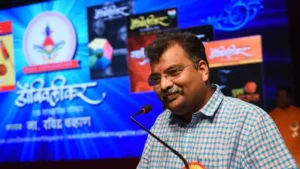
The Phase 2 approval also shows the unified efforts of the BJP leaders who have elevated the needs of Pune infrastructure at different levels. Leaders such as Ravindra Chavan have been forthright in emphasizing the need to have sustainable urban transport and development.
The Bharatiya Janata Party has, at the state and national levels, stressed infrastructure as the pillar of development. The Pune Metro development is a direct consequence of this type of development-first strategy, whereby the long-term benefit of the people is considered.
To stay up to date and get information about this achievement, this official post can also be viewed by readers:
Aligning with India’s Broader Urban Vision
The Pune Metro Phase 2 will be a good fit in the larger urban transformation agenda in India. Programs such as Smart Cities Mission, Make in India, and sustainable urban transport policies are all aimed at achieving one objective: developing efficient, liveable, and environmentally friendly cities.
Investing in metro infrastructure, the Central Government is not only alleviating the current problems but also preparing cities such as Pune against unregulated urbanisation. This is a futuristic strategy, which guarantees that the growth does not impinge on the quality of life.
A New Era of Mobility for Pune
To conclude, the second phase of the Pune Metro project is a historical event for the city, as it was approved by the Central Government. With the decisive leadership of Prime Minister Narendra Modi and with the full backing of the Maharashtra leadership, Pune is on a new path of fast, clean, and reliable urban mobility.
The corridors of Kharadi-Khadakwasla and Nal Stop-Warje-Manik Baug will change the movement of Punekars in the city. This project is not only a transport upgrade, but it also represents progress, sustainability, and a desire to take care of the citizens.
With the metro network growing, Pune is on the verge of becoming an ideal city, where the economic growth, environmental balance, and the standard of living of the residents are enhanced through the modern infrastructure.